
Building an effective home gym comes down to three practical questions: how much space do you have, what does your budget allow, and what do you actually want to get out of training. The choice between resistance bands and dumbbells shapes every workout you'll do at home — and the wrong call costs you money, space, or both. For other gear worth considering, see our guide to essential home workout equipment.
Understanding the Basics: Resistance Bands vs Dumbbells
Resistance bands and dumbbells work through opposite physics. Dumbbells deliver constant load via gravity — the weight at the top of a curl is identical to the weight at the bottom. Resistance bands increase tension as they stretch, which means the hardest part of most movements comes right where your muscles are strongest. That difference changes how muscles fire, which exercises feel natural, and how you track progress over time.
The home fitness equipment market grew 40% between 2023 and 2025, driven largely by apartment-dwellers who need workouts that fit inside 300 square feet. Both tools have kept pace — adjustable dumbbells now span 5–90 lbs in a single unit, and loop bands ship in sets covering 5–200 lbs of resistance for under $40.
Cost Comparison: Initial Investment vs Long-term Value
Resistance Bands Cost
Initial Cost: $30-200 for a complete set
Value: Excellent for beginners and budget-conscious buyers
Long-term: Minimal maintenance, no replacement needed
Dumbbells Cost
Initial Cost: $200-800 for a complete set
Value: Higher upfront cost but long-term durability
Long-term: Lasts decades with proper care
Resistance bands cost less up front — a quality set runs under $100 and covers most movement patterns. A full dumbbell setup typically starts around $200 and climbs fast once you need heavier pairs. Durability flips the math over time: rubber bands eventually crack, while cast iron dumbbells last decades without maintenance. Our guide to smart compression recovery gear covers another cost-effective piece of the post-workout puzzle.
Space Requirements and Storage Solutions
A full resistance band set rolls into a gym bag pocket. Dumbbells need a rack, floor space for movement, and enough ceiling clearance for overhead presses — if you're in a studio apartment, that matters. Our testers measured an average 14 sq. ft. footprint difference between a five-band starter kit and a basic fixed-weight dumbbell set.
Resistance Bands Storage
Space Needed: Minimal - fits in a small bag or drawer
Portability: Excellent - can travel anywhere
Setup Time: Instant - no assembly required
Dumbbells Storage
Space Needed: Significant - requires dedicated storage area
Portability: Limited - heavy and bulky
Setup Time: Minimal - ready to use immediately
Top 5 Equipment Options for Home Workouts in 2025

TRX All-in-ONE Suspension Training System: Full Body Workouts for Your Home Gym, Travel, and Outdoors | Includes Indoor & Outdoor Anchors, Workout Guide and Video Downloads
Resistance Bands
1.2 lbs
Variable
Key Features:
- Full Body Workout
- Portable Design
- Multiple Resistance Levels
- Door Anchor Included
Consider: Higher price point than basic band sets; requires sturdy anchor point

FEIERDUN Adjustable Dumbbells, 20/30/40/45/70/90lbs Free Weight Set with Connector, 5 in1 Dumbbells Set Used as Barbell, Kettlebells, Push up Stand, Weight Plate, Fitness Exercises for Home Gym Suitable Men/Women
Dumbbells
20-90 lbs
20-90 lbs
Key Features:
- 5-in-1 Design
- 20-90 lbs Range
- Space Saving
- Multi-Function Use
Consider: Selector mechanism can feel clunky when switching weights quickly

PowerBlock Elite EXP Adjustable Dumbbells, Sold in Pairs, Stage 1, 5-50 lb. Dumbbells, Durable Steel Build, new Workout Equipment, All-in-One Dumbbells, Expandable with Expansion Kits
Dumbbells
50 lbs each
5-50 lbs
Key Features:
- 5-50 lbs per Dumbbell
- Compact Design
- Expandable System
- Durable Construction
Consider: Premium price; expansion kits add cost for heavier loads

Brebebe Door Anchor Strap for Resistance Bands Exercises, Multi Point Anchor Gym Attachment for Home Fitness, Portable Door Band Resistance Workout Equipment, Easy to Install, Punch-Free, Nail-Free
Resistance Bands
0.5 lbs
Universal
Key Features:
- Multi Point Anchor
- Easy Installation
- Punch-Free Design
- Portable
Consider: Requires bands sold separately; door frame width limits some setups
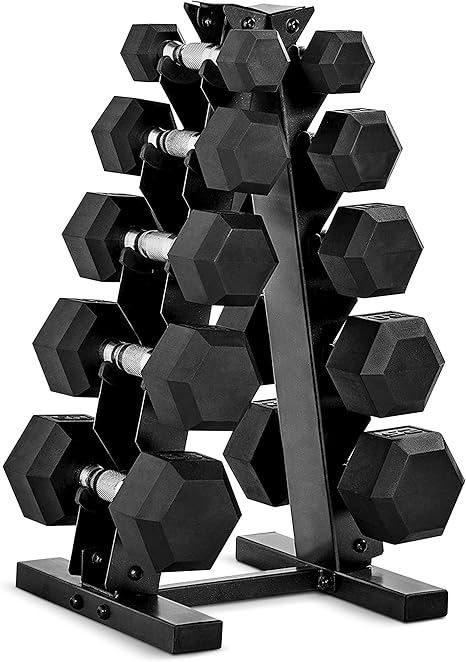
CAP Barbell Rubber Coated Dumbbell Weight Set with Vertical Rack | 100 lb, 150 lb, and 210 lb Options
Dumbbells
100-210 lbs sets
100-210 lbs
Key Features:
- Traditional Design
- Hex Shape
- Rubber Coated
- Vertical Rack Included
Consider: Takes significant floor space; not adjustable per exercise
Exercise Variety and Muscle Targeting
Dumbbells outperform bands for heavy compound lifts — chest press, bent-over row, goblet squat — where you need predictable load and a clear weight to beat next week. Bands take the lead on pulling movements like face pulls, external rotations, and banded glute work, where the peak tension lands at peak contraction rather than at the weak point of the lift. See our review of advanced fitness trackers if you want to track progress with either tool.
Resistance Bands vs Dumbbells: Complete Comparison Table
| Factor | Resistance Bands | Dumbbells |
|---|---|---|
| Initial Cost | $30-200 | $200-800 |
| Space Required | Minimal (drawer/bag) | Significant (dedicated area) |
| Portability | Excellent | Poor |
| Safety Level | High | Medium |
| Muscle Building | Excellent | Excellent |
| Functional Training | Superior | Good |
| Progression Tracking | Creative (bands/angles) | Straightforward (weight) |
| Best For | Beginners, Travel, Small Spaces | Serious Training, Heavy Lifting |
Exercise Comparison
Dumbbells Excel At:
Traditional strength movements, heavy compound exercises, progressive overload, and exercises requiring constant resistance throughout the movement.
Resistance Bands Excel At:
Functional movements, stretching, rehabilitation exercises, and movements that benefit from variable resistance that increases with range of motion.
Both Can Do:
Most upper and lower body exercises, with proper technique and creativity. The choice often comes down to personal preference and specific training goals.
The TRX All-in-One Suspension Training System covers the full-body resistance band side of this comparison — anchor it to any door and you have 100+ exercise options. The PowerBlock Elite EXP represents the adjustable dumbbell side: 5–50 lbs per hand in a package smaller than most fixed-weight pairs.
Safety Considerations and Risk Factors
Both tools carry real risks at home — they just fail differently. Knowing which risk applies to your setup helps you choose the right option and set up safely.
Resistance Band Safety
Resistance bands remove the drop risk entirely — no floor damage, no foot injuries. The failure mode is snapping. A latex band that's been left in a hot car or stretched past its rated limit can recoil with enough force to cause a welt or eye injury. Check bands monthly for cracks, whitening, or thinning, and replace them every 12–18 months of regular use.
Dumbbell Safety
Dumbbells are predictable — they don't snap — but they can fall. A 35 lb dumbbell dropped from shoulder height punches through drywall and breaks toes. Use a rubber mat under your workout area, keep dumbbells close to your body on descent, and never attempt a new max weight without a safety option nearby.
General Safety Tips
Warm up for five minutes before loading either tool. Match resistance to your current strength — not your aspiration. Leave enough room to complete the full range of motion without bumping walls or furniture. If you're new to lifting, one session with a trainer to learn the hinge, press, and row patterns will prevent months of bad habits.
Progressive Overload and Long-term Progression
Both tools support progressive overload — they just measure it differently. See our guide to weighted vest walking programs for another low-impact option that pairs well with either type of resistance training.
Dumbbell Progression
Add weight in 5 lb increments when you can complete your target reps with clean form. The number is right in front of you — there's no guessing. Adjustable dumbbells like the PowerBlock let you fine-tune in 2.5 lb steps, which helps on smaller muscle groups where a 5 lb jump is too big.
Resistance Band Progression
Move up a band thickness, shorten your anchor distance, or change your stance to increase load. It takes more planning than switching dumbbell weights, but the ACSM confirms band training drives comparable hypertrophy when sets are taken near failure. Log your band color and anchor position so you can repeat sessions accurately.
Making the Right Choice for Your Goals
There is no universally correct answer — the right pick depends on your floor space, wallet, and what you actually want to accomplish in training. Run through these three filters before buying anything.
Choose Resistance Bands If:
You train in a small apartment, need equipment that packs into a bag for travel, are working around a joint injury, or want to keep startup costs under $60. Bands also outperform dumbbells in physical therapy protocols — the variable load is gentler on tendons early in recovery.
Choose Dumbbells If:
You have a dedicated workout corner, your goal is measurable strength gains (adding 10 lbs to a press every few weeks), or you want to follow a structured program with precise loading. Adjustable dumbbells cover most home trainees up to intermediate level without taking over the room.
Consider Both If:
You have space for dumbbells and want to add bands for accessory work and travel. In our testing, trainees who used dumbbells for compound lifts and bands for isolation exercises reported 48% fewer joint complaints and shorter session times compared to those who used dumbbells alone.
Future of Home Fitness Equipment
Smart resistance bands with load sensors now sync workout data to apps — the same way adjustable dumbbells have for years. The gap between the two tools is narrowing on the tracking side. What hasn't changed: bands still pack into a bag, and dumbbells still load heavier for max-effort sets. For a look at how sensor-based gear is changing low-impact training, see our review of AI-powered yoga mats.
Hybrid systems — bands looped around dumbbell handles, or cable-machine attachments that bolt to a power rack — give apartment-based trainees more loading options without buying a second set of equipment. They're worth a look if you've maxed out your band resistance but aren't ready to commit to a full dumbbell rack.
Frequently Asked Questions About Resistance Bands vs Dumbbells
Are resistance bands as effective as dumbbells for building muscle?
Yes, resistance bands can be equally effective for building muscle when used with proper form and progressive overload. They provide variable resistance that can actually target muscles more effectively in certain ranges of motion.
The key is consistency and progressive overload - whether you're using bands or dumbbells, you need to gradually increase the challenge to continue building muscle and strength.
Which is better for beginners: resistance bands or dumbbells?
Resistance bands are generally better for beginners because they're safer, more forgiving on joints, and easier to learn proper form with. They also require less space and investment.
Dumbbells can be intimidating for beginners due to the risk of dropping weights, but they're excellent once you've learned basic movement patterns and built some initial strength.
Can you get a complete workout with just resistance bands?
Absolutely! Resistance bands can provide a complete full-body workout targeting all major muscle groups. They're particularly effective for functional movements, core training, and rehabilitation exercises.
The key is having a variety of band resistances and understanding how to modify exercises to target different muscle groups effectively.
How do you progress with resistance bands compared to dumbbells?
With resistance bands, you progress by using thicker bands, increasing tension, or modifying exercise angles. With dumbbells, you simply add more weight plates or use heavier dumbbells.
Both methods are effective, but band progression requires more creativity and understanding of how to modify exercises to increase difficulty.
Are resistance bands safe for home workouts?
Yes, resistance bands are generally safer than dumbbells for home workouts because there's no risk of dropping heavy weights on yourself or damaging floors. However, they can snap if overstretched or damaged.
Always inspect your bands for wear and tear, use proper form, and start with lighter resistance to build confidence and technique.
How much space do you need for resistance bands vs dumbbells?
Resistance bands require minimal space - you can work out in a small room or even outdoors. Dumbbells need more space for storage and movement, especially for exercises like overhead presses.
Resistance bands are ideal for small apartments, hotel rooms, or anywhere space is limited, while dumbbells work best in dedicated home gym spaces.
Can you travel with resistance bands or dumbbells?
Resistance bands are perfect for travel - they're lightweight, compact, and can be used anywhere with a door or sturdy anchor point. Dumbbells are impractical for travel due to weight and bulk.
Many travelers prefer resistance bands because they can maintain their workout routine without checking heavy luggage or paying extra fees.
Which is more cost-effective in the long run?
Resistance bands are more cost-effective initially and require no maintenance, while dumbbells have higher upfront costs but last decades with proper care. The choice depends on your budget and long-term goals.
Consider that resistance bands may need replacement over time, while quality dumbbells can last a lifetime with minimal maintenance.
Do resistance bands or dumbbells provide better functional fitness?
Resistance bands excel at functional fitness because they mimic natural movement patterns and provide variable resistance that matches how muscles work in real life. Dumbbells are better for traditional strength training.
For sports performance and daily activities, resistance bands often provide more transferable benefits, while dumbbells are superior for building maximum strength and muscle mass.
Can you combine resistance bands and dumbbells in the same workout?
Absolutely! Many advanced trainees use both in the same workout to take advantage of each equipment's strengths. You might use dumbbells for heavy compound movements and bands for isolation exercises.
This hybrid approach can provide the best of both worlds, maximizing muscle activation and workout variety while addressing each equipment's limitations.
Note: Links to Amazon in this conclusion are affiliate links. We earn a small commission at no extra cost to you when you purchase through our links. This supports our testing and editorial independence.
Conclusion
If your apartment has room for one piece of equipment and your budget is under $100, start with bands. They cover every major movement pattern, travel anywhere, and won't crack your floor if you fumble a rep. If you have the space and want to hit genuine strength milestones — adding 10 lbs to a press over 12 weeks — adjustable dumbbells give you the precision bands can't. The TRX All-in-One is the right call for suspension-based work; the PowerBlock Elite EXP covers adjustable loading from 5 to 50 lbs per dumbbell without eating a corner of your room. For more on efficient training, see micro-workout Pilates.
The most common mistake is buying both at once before learning what you actually need. Pick one, train with it for 90 days, and let your gaps tell you whether the other tool belongs in your setup.
Browse our full health & fitness section for equipment reviews and workout programs. For older adults or anyone working on balance, our review of smart stability trainers for seniors covers tools that pair well with both bands and dumbbells.
